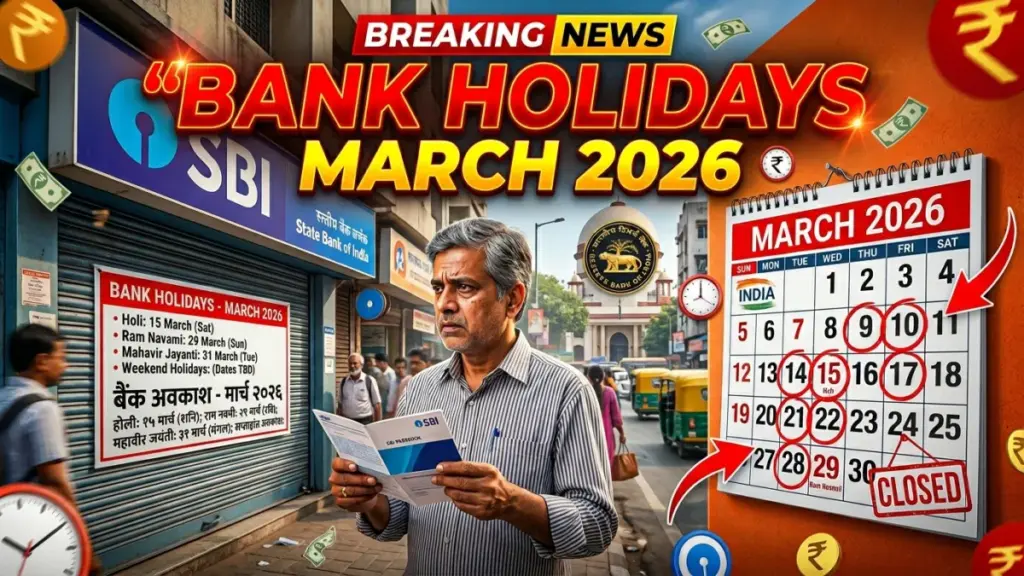
Bank customers across India may want to review the holiday schedule before planning branch visits in March 2026. The Reserve Bank of India has issued its monthly calendar outlining bank closures across states, and the list indicates that several public holidays, regional festivals, and regular weekend breaks will affect physical banking operations during the month. Because India follows a state-wise system for banking holidays, the exact dates of closures may vary depending on location.
March is typically one of the busiest months for financial transactions. Businesses often complete financial year-end accounting, while salaried employees finalize tax-saving investments and documentation. With multiple holidays expected during the same period, customers relying on branch services such as cheque deposits, locker access, and document verification may need to plan ahead. Digital services like UPI, mobile banking, and internet banking are expected to continue operating, but certain processes still require in-person visits.

According to reports, the RBI’s bank holiday calendar distinguishes between national closures and those linked to regional observances. As a result, a bank branch operating in one state may remain open while another branch of the same bank in a different state remains closed. Understanding this decentralized system becomes particularly important for businesses and individuals who operate accounts across multiple cities.
Why March Becomes a Critical Month for Banking Activity
The last month of the financial year often sees a surge in banking activity across India. Businesses complete balance sheet adjustments, loan repayments, and vendor settlements, while individuals finalize tax-related investments and documentation before the fiscal deadline of March 31. Because of this concentration of financial tasks, even a single unexpected holiday can disrupt planned banking visits.

In practical terms, bank branches may experience heavy customer traffic during the final weeks of March. If holidays fall close to the end of the month, cheque clearing or paperwork processing may take longer than usual. Financial advisors often recommend completing important branch-related tasks earlier in the month whenever possible, especially if transactions depend on manual verification or physical documents.
How the Reserve Bank Categorizes Bank Holidays
The RBI classifies banking holidays into different operational categories. One of the most common is holidays declared under the Negotiable Instruments Act, which generally apply to public-facing banking services such as cheque clearing, branch operations, and customer counters. These holidays vary significantly between states because they often align with regional festivals or local commemorations.

Another category relates to Real Time Gross Settlement (RTGS) system holidays, which can affect certain high-value fund transfers. Additionally, banks observe internal closing days linked to accounting procedures. While customers may not always notice these classifications directly, they influence whether services like cheque processing or large-value transfers are completed on a particular day.
Regional Festivals That May Affect Branch Operations
Several regional celebrations scheduled during March can influence bank closures in specific parts of the country. Festivals such as Holi in northern states, along with local observances and state-level public holidays, may lead to staggered closure patterns across India. This means that a bank in Delhi or Patna may remain closed on a day when branches in southern states remain operational.
For customers dealing with inter-state financial activity, this difference can sometimes create timing challenges. For example, a business owner based in Mumbai who needs to coordinate document submission with a branch in Kolkata may find that the two locations observe different holiday schedules. According to available information, checking both states’ calendars before scheduling financial transactions can help avoid delays.
Digital Banking Continues Even During Holiday Periods
Despite branch closures on certain dates, most digital banking services are designed to remain functional throughout the month. Transactions through UPI platforms, mobile banking applications, internet banking portals, and ATM withdrawals generally continue without interruption. These services have significantly reduced dependency on physical branches for routine financial tasks.

However, some limitations still apply. High-value transfers, loan documentation, locker access, and certain verification procedures may require physical branch interaction. An industry professional familiar with banking operations explains that holiday closures usually affect processes involving manual approval or paperwork, while automated systems continue running in the background.
Financial Year-End Timelines Can Narrow Transaction Windows
Because March marks the closing of the financial year, the sequence of holidays near the end of the month can influence transaction timelines. In previous years, customers have occasionally experienced delays in cheque clearing when multiple holidays coincided with weekends. Such situations reduce the number of working days available for processing.

A practical example illustrates this challenge. If a trader deposits several cheques close to the end of March and consecutive holidays fall shortly after, the bank may require additional time to process those payments. While digital alternatives exist, certain financial instruments and official documents still depend on branch-level verification, making advance planning useful.
Ways Customers Can Confirm the Correct Holiday Schedule
Bank customers can verify the exact holiday dates applicable in their state through several official channels. Most banks publish monthly holiday calendars on their websites and mobile applications. Additionally, the Reserve Bank of India provides a state-wise holiday list that outlines the days when banks are expected to remain closed under various regulatory categories.
In addition to festival-related closures, customers should remember that banks across India remain closed on all Sundays and on the second and fourth Saturdays of each month. When regional holidays fall next to these weekends, the result may be extended closure periods in certain states. Verification through official sources is recommended before planning important branch visits or financial submissions.
Disclaimer: This article is based on publicly available information regarding bank holiday schedules and general banking guidelines. Holiday dates and operational details may vary by state and by individual bank. Customers are advised to confirm the exact holiday list through their respective bank’s official website or notifications before scheduling important financial transactions. Services and processing timelines may differ depending on bank policies and regional regulations.