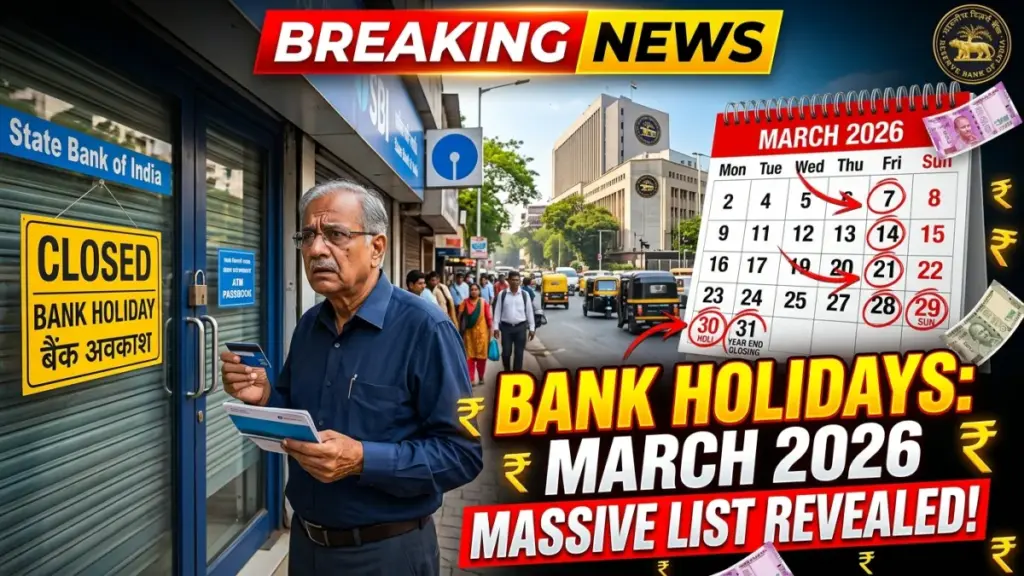
The Reserve Bank of India has issued the official bank holiday calendar for March 2026, outlining the days when bank branches across different states will remain closed. The announcement is particularly relevant because March marks the closing period of the financial year in India, when individuals and businesses complete tax planning, account reconciliations and financial reporting.
Unlike several other government departments that follow uniform national holidays, banks operate under a state-specific holiday structure. As a result, branch closures may vary across regions depending on local festivals, government notifications and administrative observances. According to reports, some holidays fall under nationwide categories, while others apply only in particular states or cities.

In practical terms, customers planning branch visits in March should review the official schedule carefully. Digital banking platforms such as mobile banking, internet banking and ATM services generally continue operating during holidays, but services that require physical presence — including document verification, locker access and certain account procedures — may remain unavailable. Understanding these operational differences may help customers avoid delays during an already busy financial period.
How the RBI Organises the Bank Holiday Framework
The Reserve Bank of India categorises banking holidays under several regulatory heads. Among the most important is the holiday classification under the Negotiable Instruments Act, which typically determines when banks close for public-facing services. These holidays often correspond to national celebrations, major festivals or state-level public observances.

Another classification involves system-level operational holidays linked to settlement systems such as high-value transfer infrastructure. Although many digital services continue functioning, some settlement processes follow cut-off timings or maintenance schedules. According to available documents, this layered structure explains why a bank branch may remain closed in one state while branches elsewhere operate normally on the same date.
Financial Year-End Activity Makes March a Sensitive Month
March is traditionally one of the busiest periods for India’s banking sector. Businesses finalise annual accounts, individuals submit investment proofs for tax calculations and many organisations settle outstanding payments before the financial year closes. Even a small disruption in branch availability can influence the timing of certain transactions.

A banking operations consultant noted that year-end activity often places pressure on both customers and bank staff. “Most routine digital transactions continue without interruption,” the expert explained, “but procedures requiring in-person documentation still depend on branch working days.” In practical terms, this means that customers who plan cheque deposits, loan documentation or locker visits may benefit from checking holiday dates in advance.
Regional Festivals Shape State-Wise Closure Patterns
One of the reasons bank holidays differ across India is the country’s diverse cultural calendar. Regional festivals, state formation days and local commemorations can all influence whether bank branches remain open or closed in a particular region. As a result, the holiday schedule in eastern India may look quite different from that in western or southern states.

For instance, certain festivals observed widely in northern states during March may lead to closures there but not in southern cities where the same event is not officially recognised as a bank holiday. According to reports, such variations highlight the decentralised nature of India’s banking holiday structure. Customers operating accounts in multiple states should verify each branch’s operational calendar before scheduling important visits.
Digital Banking Continues Even During Branch Closures
Despite physical branches remaining closed on designated holidays, most digital banking services generally remain accessible. Unified Payments Interface transfers, internet banking transactions and ATM withdrawals typically operate throughout the month, including weekends and public holidays.

However, certain transactions may still depend on internal processing schedules. For example, high-value transfers or cheque clearances might follow bank working days for final settlement. In practical terms, a transaction initiated on a holiday may be processed fully on the next operational day. This distinction is particularly relevant for businesses handling time-sensitive payments or financial reporting deadlines.
What Customers and Businesses Should Keep in Mind
The combination of public holidays and regular weekly closures can occasionally create extended non-working periods for banks. Second and fourth Saturdays, along with Sundays, are already standard holidays across the banking system. When these dates coincide with regional festivals or official public holidays, the result may be multiple consecutive non-working days.
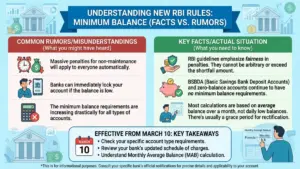
Consider a small enterprise that plans to deposit several cheques toward the end of March to complete year-end accounting. If two holidays occur alongside a weekend, the effective processing window may shrink significantly. While electronic payment options provide alternatives, certain financial activities still require in-branch interaction. According to available guidance, advance planning may help avoid last-minute complications.
Confirming State-Specific Holiday Dates Before Visiting a Branch
Because bank holidays differ from state to state, customers are encouraged to verify the applicable dates before travelling to a branch. Most banks publish monthly holiday calendars on their official websites and mobile applications. These calendars typically list both nationwide holidays and regional observances relevant to particular states.
Customers may also receive notifications through SMS alerts or mobile banking messages regarding upcoming closures. Verification is recommended when planning important financial tasks such as loan documentation, locker access or account updates. In practical terms, consulting official bank communication channels remains the most reliable way to confirm whether a branch will be open on a particular day.
Disclaimer: This article is provided for informational purposes based on publicly available banking schedules and general regulatory guidelines. Bank holiday dates may differ across states and may be revised through official notifications. Customers are advised to confirm operational days directly through their bank’s official website, customer service channels or branch offices before planning important financial transactions. Availability of services may vary depending on the institution and regional regulations.